
Injury update
Pace-bowling watch: two quicks under fitness clouds before Tuesday
Net-session updates from both camps, replacement options if either is held back, and how this affects fantasy team construction for the evening game.
By IPL Fantasy Score editorial desk · Published 2026-04-07 · 7 min read

On this update
What we saw at the net session
Two pace bowlers - one from RCB, one from KKR - are under fitness clouds for Tuesday's fixture at the Chinnaswamy. Neither bowled at full intensity in the morning net session, and both are scheduled for late-afternoon fitness tests with the team physio.
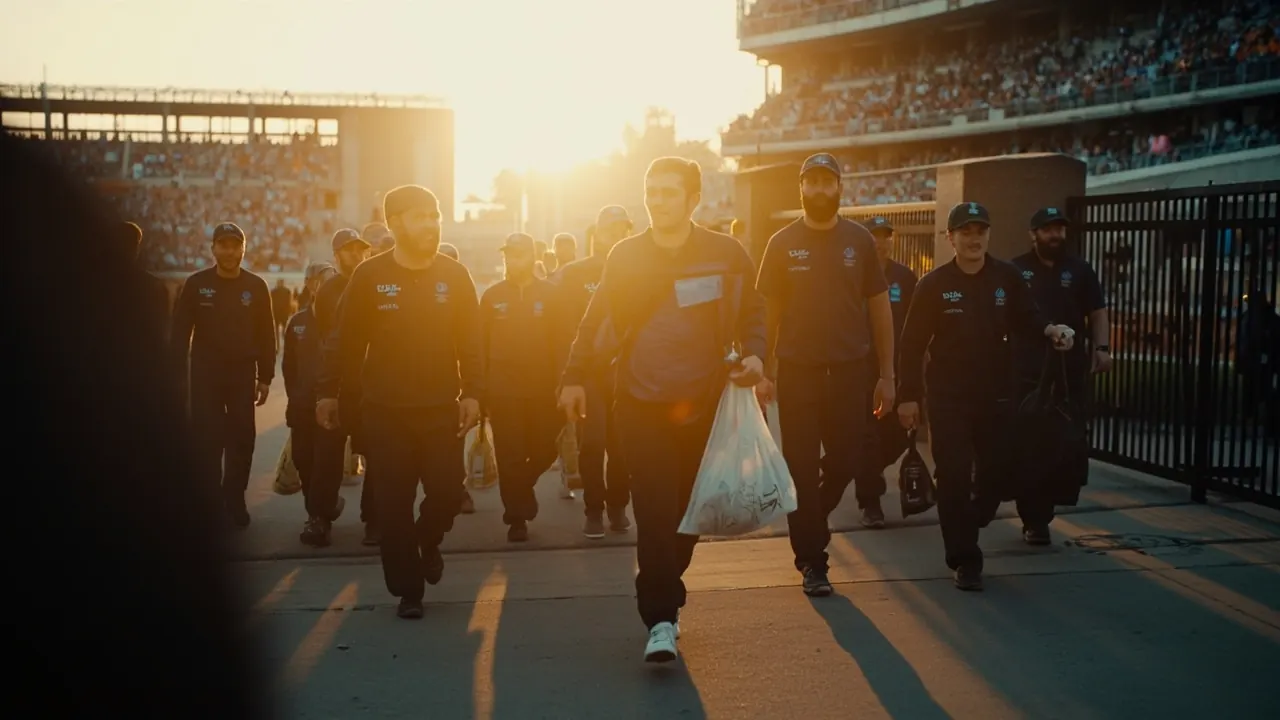

The RCB quick did not bowl at full pace; the KKR all-rounder bowled a short spell but did not finish. Both are expected to be named in the squad at toss, but a final decision on playing XI is unlikely before the team sheet is submitted.
Replacement options
If the RCB quick is held back, the likely replacement is the squad's third seamer, who has played two matches this season at an economy of 8.2. He is not a fantasy captain pick; he is a depth bowler who can hold one end.
If the KKR all-rounder is held back, the squad has a pace-bowling all-rounder on the bench who has not yet played this season. His ceiling is higher than the regular starter, but his control is lower.
The desk's habit is to wait for the playing XI at toss before locking the fantasy team. The named impact player is the second-biggest variable; the bowler rotation is the third.
Fantasy impact
Three things to do before locking tonight's team.
1
Wait for the XI at toss
Both quicks may be named in the squad and held back at the last minute. Wait for the playing XI before locking.
2
Watch the impact player
The named impact player changes the bowling rotation. Confirm at toss.
3
Bias the death overs
On a Chinnaswamy flat deck, the death overs are the highest-scoring phase. Captain a death-overs bowler if the regular starter is held back.
Related reading

What this page covers, in long form
A second pass through the topic with extra context, examples and the small habits the desk uses on its own teams.
Insight 01
Surface over form
The single biggest input to any fantasy cricket decision is the playing surface, not the recent form table. A dry Chepauk turner rewards a different XI than a flat Chinnaswamy track, and a green Mohali morning changes the captain pick again. Reading the pitch report the night before the toss is the highest-use habit a fantasy reader can build.
Insight 02
Captain over eleven
The captain pick is worth more than the eleven. A captain who scores 40 with two boundaries earns 96 fantasy points before any milestone bonus; the same innings from a non-captain earns 48. The captain multiplier is where most of the season's variance is decided, and the captain pick should be made after reading the surface, not before.
Insight 03
Bankroll beats picks
The desk's strongest readers win not because of better captain picks but because of better bankroll habits. A fixed stake per contest, three small contests instead of one big one, and a hard stop after three straight losses are the boring habits that keep readers in the contest long enough to learn.
A note on ownership
Ownership percentage is the most under-used input on a fantasy desk. In a large contest, the captain should rarely be the most-picked player. A captain who is owned by 8% of the contest and who fits the surface gives you a swing; a captain who is owned by 60% gives you no differential. Track ownership through the season, not just at the start.
Five reads the desk returns to
Articles, columns and references the desk keeps open in a browser tab through the season.

Match report
MI edge CSK in a 19-over chase
The desk's read on Tuesday's Wankhede fixture and what it means for the rest of the week.
Captain pick
Captain pick of the day
The 4-factor reasoning for tonight's captain pick: surface, form, match-up, role.

Pitch report
Chepauk reading: dry top, slow turn
What the surface looks like 90 minutes before toss, and the fantasy angle.
Team preview
Mumbai Indians: a rebuild on a flat deck
A new opening pair and a death-over reshuffle.
Three things to carry into the next page
A short reading-end summary for the desk's match-day readers.
1
The surface is the input
Read the pitch report before you read the line-up. The surface dictates the captain pool more reliably than the recent form table. A dry turner and a flat deck are different games; treat them as such.
2
The captain is the output
Pick the captain after the surface, form and match-up all point one way. If they do not point one way, pick the differential. The captain pick is the single biggest source of variance in any contest.
3
The bankroll is the discipline
Fixed stake per contest, three small contests instead of one big one, walk away after three losses. The boring habits are the ones that keep winners in the contest long enough to learn.
Editorial reminder
IPL Fantasy Score is an editorial publication. We do not run a paid fantasy platform; we publish coverage. The desk's habit is to describe the captain logic in plain language and let the reader decide. We do not promise winning teams. We publish reasoning.