
Match report
MI edge CSK in a 19-over chase
The desk's read on Tuesday's Wankhede fixture and what it means for the rest of the week.
A free beginner explainer: what a contest is, how the salary cap works, how the captain pick works, and how scoring actually works.
The mechanic in two paragraphs.
A fantasy cricket contest is a game you play against other readers. Each reader picks a virtual team of 11 real cricket players from the squads that will play in an upcoming IPL fixture. The real players then play the real match; your virtual team's score is the sum of the points your 11 players earn on the field.
The contest ranks readers by their virtual team's points. The top finishers in paid contests win a share of the prize pool; practice contests pay in practice credits. The mechanic is the same; only the stakes differ.
Why you cannot pick all the best players.
Each player in an IPL squad is assigned a salary by the platform. Batters and all-rounders in form tend to cost more; bench players and overseas rookies tend to cost less. You have a fixed budget - usually 100 credits - and you must pick 11 players who fit under it.
The salary cap is what makes the contest interesting. The eleven best players on paper cost more than the cap; you have to choose which one or two you leave out, and that choice is what differentiates a strong team from a weak one.
The single most important decision in any contest.
One of your 11 players is your captain. The captain's on-field points are multiplied by 2. One is your vice-captain, multiplied by 1.5. The captain pick is the biggest single source of variance in any contest.
The captain pick is a two-part decision. First, who is most likely to top-score on this surface? Second, in a large contest, is that player heavily owned? A captain who is owned by 60% of the contest gives you no differential; a captain who is owned by 8% and who fits the surface gives you a swing.
The standard T20 reference, briefly.
A batter earns 1 point per run, 4 bonus points for a boundary and 6 for a six. Milestones add bonuses: +4 for a 30, +8 for a fifty, +16 for a hundred. A bowler earns 25 points per wicket, with bonuses for LBW or bowled dismissals. Fielding earns 8 points per catch and 12 for a stumping. The captain multiplier doubles everything.
Read the full points reference for the complete table, including economy bonuses and strike-rate bands.
What to do in the first hour.
Mobile number, OTP, name, email. Two minutes.
The fixture list shows the next games. Tap one to see the contests available for it.
Practice contests are free. Paid contests have an entry fee. Start with practice.
Pick 11 players within the salary cap. Choose a captain and a vice-captain. Confirm at toss.
Submit 30 minutes before the first ball. Watch the match. The platform scores in real time.
A second pass through the topic with extra context, examples and the small habits the desk uses on its own teams.
Ownership percentage is the most under-used input on a fantasy desk. In a large contest, the captain should rarely be the most-picked player. A captain who is owned by 8% of the contest and who fits the surface gives you a swing; a captain who is owned by 60% gives you no differential. Track ownership through the season, not just at the start.
Articles, columns and references the desk keeps open in a browser tab through the season.
The desk's read on Tuesday's Wankhede fixture and what it means for the rest of the week.
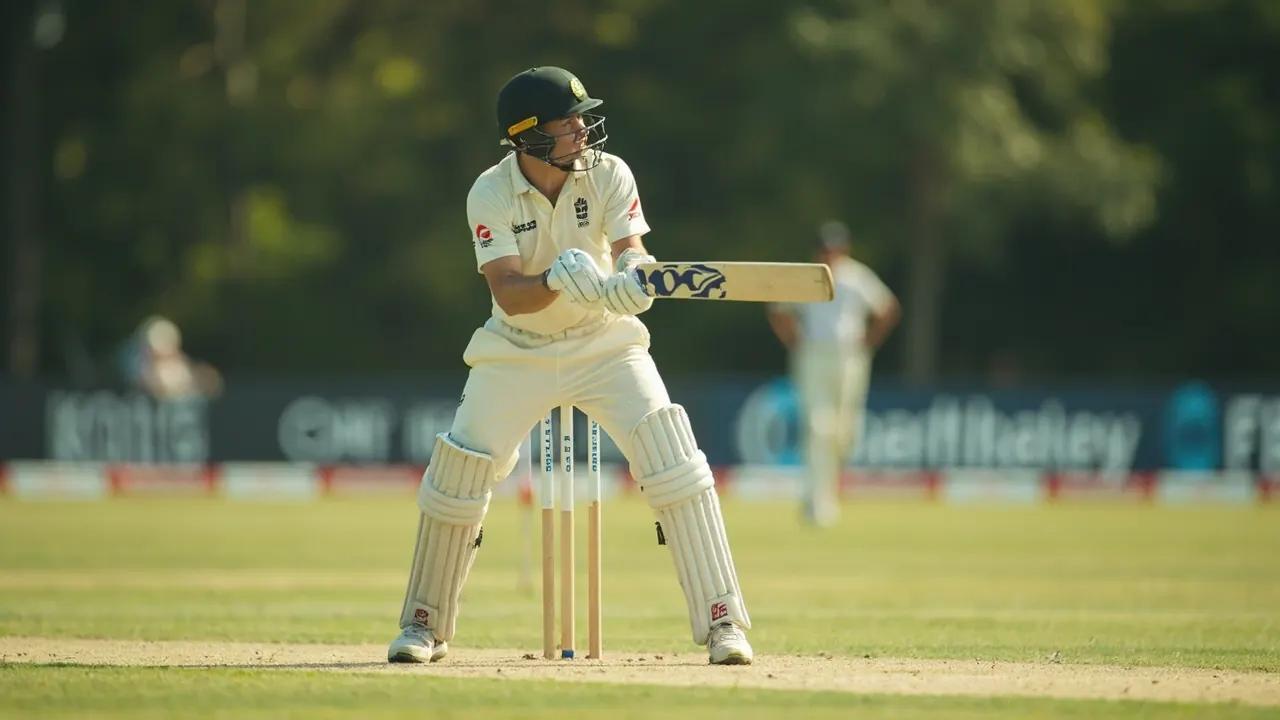
The 4-factor reasoning for tonight's captain pick: surface, form, match-up, role.

What the surface looks like 90 minutes before toss, and the fantasy angle.

A new opening pair and a death-over reshuffle.

A short reading-end summary for the desk's match-day readers.
Read the pitch report before you read the line-up. The surface dictates the captain pool more reliably than the recent form table. A dry turner and a flat deck are different games; treat them as such.
Pick the captain after the surface, form and match-up all point one way. If they do not point one way, pick the differential. The captain pick is the single biggest source of variance in any contest.
Fixed stake per contest, three small contests instead of one big one, walk away after three losses. The boring habits are the ones that keep winners in the contest long enough to learn.
IPL Fantasy Score is an editorial publication. We do not run a paid fantasy platform; we publish coverage. The desk's habit is to describe the captain logic in plain language and let the reader decide. We do not promise winning teams. We publish reasoning.