Match preview · The Hundred Women's 2026

Welsh Fire Women vs Southern Brave Women, The Hundred Women's Match 19: Sophia Gardens preview, captain picks and surface read

Sophia Gardens plays host to the only unbeaten side in the league against one still searching for a settled batting order. The 7:30 PM IST start (3:00 PM BST) on 3 August 2026 leaves a long evening in Cardiff; the desk's read is below, four hours before the toss.

By IPL Fantasy Score editorial desk · Published 2026-08-03 · 8 min read

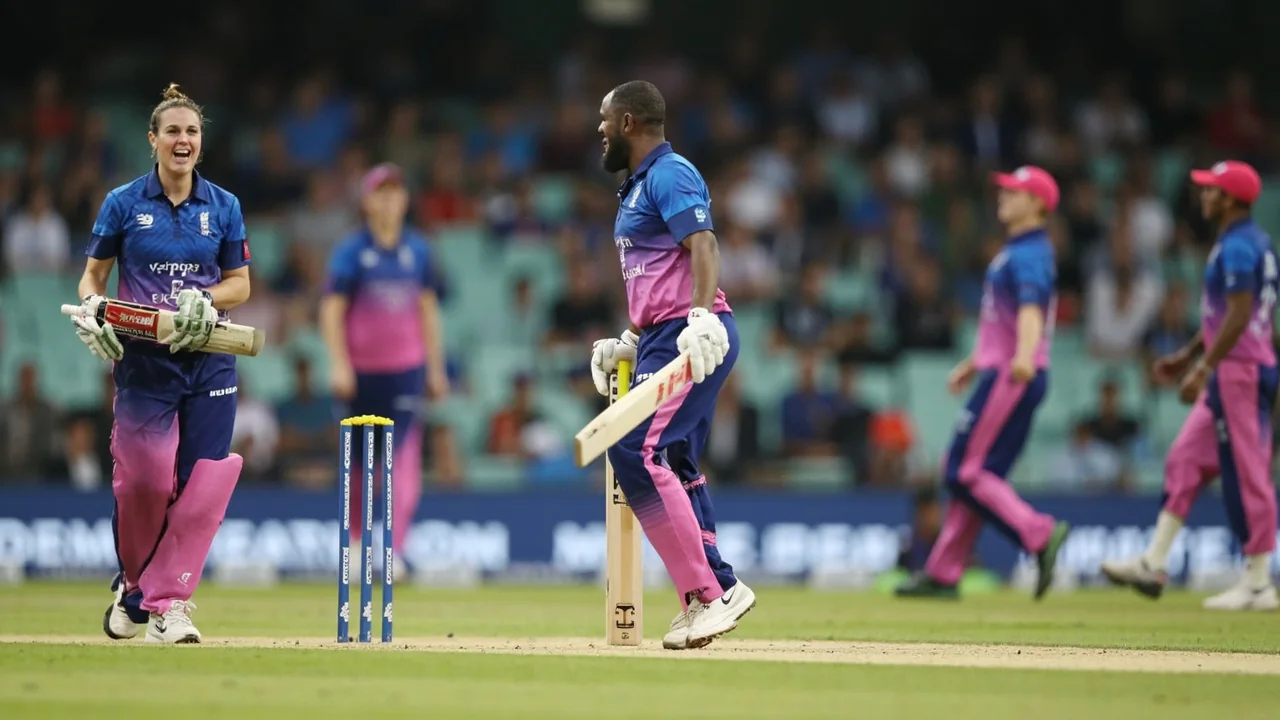
Wide establishing view of Sophia Gardens in Cardiff under evening light ahead of The Hundred Women's Match 19.

Where the table stands

Match 19 of the 2026 Hundred Women's competition brings together the most contrasting pair of records the league has produced this season. Southern Brave Women have won all five of their completed fixtures and sit at the top of the standings with ten points. Welsh Fire Women, by contrast, have taken one win from four and arrive at Sophia Gardens on the back of an indifferent run that has left them mid-table with two points.

The Cardiff surface, the early-evening start and the form line point one way, but the Hundred is a competition where the gap between the sides rarely settles the captain pick. The Hundred is also a competition where the women's game has reached its widest following in the UK, with broadcast partners, county ground attendances and fantasy contest formats all converging on a 100-ball evening that rewards small, well-reasoned decisions.

The 7:30 PM IST start (3:00 PM BST) is the second evening match of the day at Sophia Gardens. The toss will be made roughly thirty minutes earlier. With the Brave unbeaten and the Fire still searching for a settled batting order, the desk's reading is that the contest will be decided by two questions: who wins the toss, and which Brave batter builds an innings long enough to chase.

Sophia Gardens surface and the weather call

Sophia Gardens has read as a batting-friendly venue through this Hundred window. The match-day report from the venue lists the strip as best suited to pace, with an average first-innings score settling at 156 across the last two women's competitions. Square boundaries at the Cathedral Road end are short enough that a controlled pull or a clipped off-side drive clears the rope without risk; the straight boundary is the longer of the two sides, which is the usual trade-off at this ground.

The forecast for the evening is 20 degrees Celsius and partly cloudy. There is no rain threat in the current window and the ball should hold its colour through the powerplay. With the Hundred's 100-ball format compressing the middle phase, grip through the middle overs matters more than at a T20 venue of similar dimensions, and pace bowlers who vary their length are likely to out-perform turners on this surface.

From a fantasy angle the surface shifts the captain pool. On a batting-friendly Sophia Gardens strip with short square boundaries, the captain pick sits in one of three roles: a top-order batter in form, a death-overs pace bowler with a wicket-taking ceiling, or an all-rounder who bats at four or five and bowls her full allocation. A captain who only bowls or only fields at this venue is a sub-optimal pick unless the specific match-up against an opposition batter is unusually favourable.

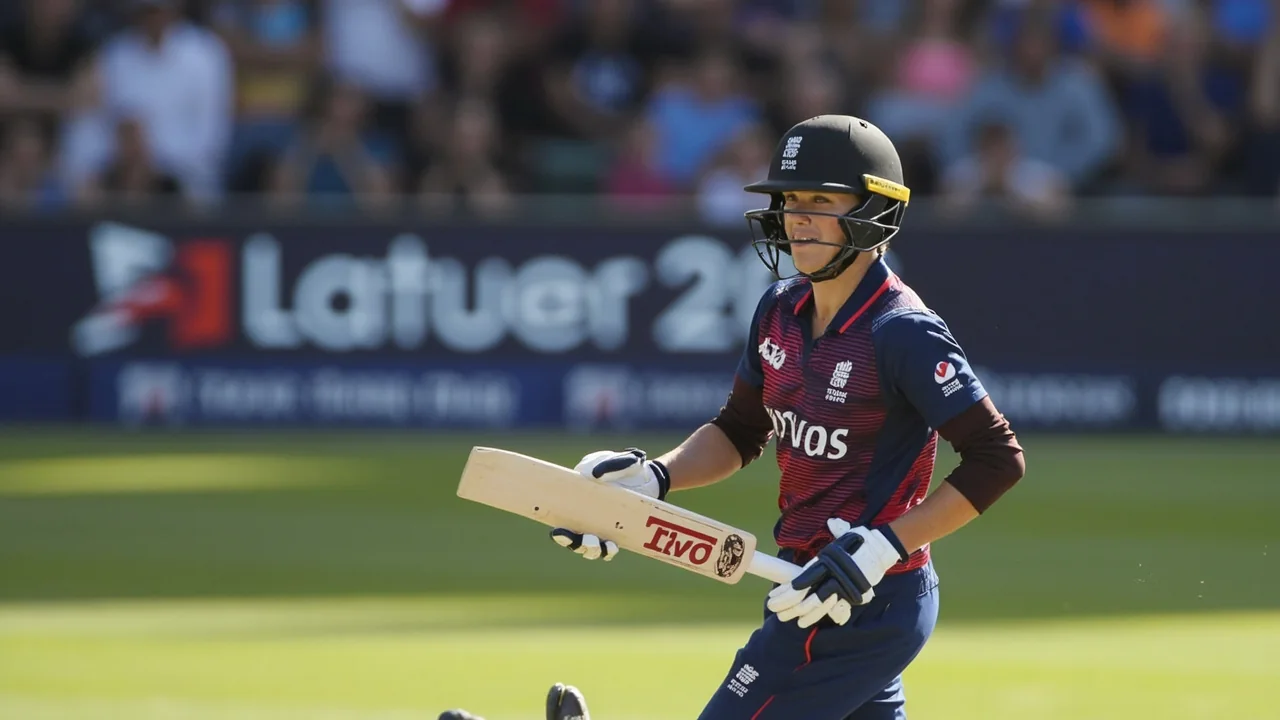
A batter in stance during a Hundred Women's fixture at Sophia Gardens, with crowd and pavilion visible in the background.

Fire form, Brave form and the numbers behind both

Sophie Devine, leading Southern Brave from the top of the order, has been the most decisive all-round contributor in the competition so far. Across four innings she has scored 104 runs at a strike rate of 152.94, and she has taken three wickets with the ball. The combination of role, form and venue puts her at the top of the small-league pool for the night. Her 152 strike rate is the kind of number that compounds through a 100-ball innings when the field is up in the first thirty balls.

Georgia Voll, opening for Welsh Fire, has been the season's quietest star at the top of the order. Across four innings she has scored 190 runs at a strike rate of 137.68, with a highest score of 52. The Fire's challenge is that their batting depth has not yet matched her top-order form: the middle order is rebuilding after a slow opening to the competition, and the bowling unit has been the side's most consistent channel of wickets.

Sophie Molineux, the Brave left-arm spinner, has been the most economical wicket-taker in the middle overs. Across the competition she has scored 58 runs and taken eight wickets, with best figures of 3 for 7. On a Sophia Gardens surface that has not turned much, her role is to control the middle phase and pick off the top order when they look to attack. Tilly Corteen-Coleman, the Brave's lead pace bowler, has six wickets in four matches with best figures of 2 for 12; she is the death-overs ceiling pick.

The head-to-head and what it tells us

The Hundred's head-to-head record between these two sides runs heavily in Southern Brave's favour. Across the women's competition's history, Southern Brave Women have won nine of the eleven completed meetings, with Welsh Fire Women taking two. The gap has been consistent across both home and away fixtures, and the recent form line has widened it further rather than closed it.

The head-to-head number is useful but not decisive. Welsh Fire Women have not had the same settled batting unit through this competition as they had in earlier seasons, and their one win this year came on a venue that rewarded a low-scoring chase. The Brave's depth in both batting and bowling is the more useful input: they have been able to win from different match scripts, while the Fire have been more one-dimensional in their route to points.

The desk's read is that the head-to-head should not be the captain pick driver at this venue. The surface, the form of the top three on both sides, and the specific match-ups between the Brave's pace bowlers and the Fire's top order are more useful inputs tonight. A captain who reads the surface and the form will out-perform a captain who reads only the head-to-head.

Captain picks: safe, differential and the all-rounder pivot

Three captain profiles for the night, with the surface and form inputs that point to each.

Safe captain

Sophie Devine (SOB-W)

104 runs in four innings at a strike rate of 152.94, three wickets with the ball, captain of the only unbeaten side in the competition. Top of the order, batting on a flat Sophia Gardens surface with short square boundaries, and a death-overs bowling role that adds points ceiling.

Differential captain

Georgia Voll (WEF-W)

190 runs in four innings at a strike rate of 137.68, highest score of 52. Opens for the Fire on a surface that rewards top-order batters, and faces a Brave bowling attack that has been tested on the road more than at home. Lower ownership than Devine in large contests.

All-rounder pivot

Sophie Molineux (SOB-W)

58 runs and eight wickets with best figures of 3 for 7. Left-arm spin, middle-overs control, wicket-taking ceiling against a Fire middle order that has not yet found a settled tempo. The cleanest vice-captain pick if you have already captained a batter.

Probable XIs

Predicted line-ups an hour before the toss. Confirm on the team-sheets at 7:00 PM IST.

Welsh Fire Women

  1. Georgia Voll
  2. Tammy Beaumont
  3. Jess Jonassen
  4. Laura Harris
  5. Sarah Bryce (wk)
  6. Beth Mooney
  7. Hayley Matthews
  8. Freya Davies
  9. Shenata Grierson
  10. Alex Griffiths
  11. Emily Windsor

Southern Brave Women

  1. Sophie Devine (c)
  2. Danni Wyatt-Hodge
  3. Maia Bouchier
  4. Smriti Mandhana
  5. Richa Ghosh (wk)
  6. Freya Kemp
  7. Sophie Molineux
  8. Amanda-Jade Wellington
  9. Tilly Corteen-Coleman
  10. Lauren Bell
  11. Linsey Smith

A clean fantasy combination for the night

The cleanest combination at this venue is 2-4-4-1: two wicketkeepers, four batters, four all-rounders, one bowler. The format matches the role distribution of both probable XIs and leaves room for two differentials in the all-rounder pool. Brave's depth in batting means a second keeper slot is affordable; Fire's depth in all-rounders means the four-all-rounder slot is the place to spend ownership.

For punt picks, the desk is leaning towards Amanda-Jade Wellington and Tammy Beaumont. Wellington is a leg-spinner who has bowled in the middle overs on a surface that has not turned much, but her googly is a different release and the Fire's right-handers in the middle order can be vulnerable to it. Beaumont is a top-order batter option if the captain wants exposure to Fire's batting depth rather than doubling up on Brave.

The two names to leave out are Linsey Smith and Emily Windsor. Neither has been a consistent points contributor this season, and their last-match credits are not yet priced into a fixture where their selection would be a guess rather than a read. The desk's habit is to keep the bowler slot reserved for the highest-ceiling wicket-taker; both names fail that test tonight.

For the readers who want a full team sheet rather than a logic tree, the desk has built two:

Team 1 (safe): Sarah Bryce (wk), Richa Ghosh; Georgia Voll, Tammy Beaumont, Sophie Devine (c), Danni Wyatt-Hodge; Jess Jonassen, Hayley Matthews, Sophie Molineux (vc), Freya Kemp; Tilly Corteen-Coleman.

Team 2 (differential): Richa Ghosh (wk), Sarah Bryce; Georgia Voll (c), Smriti Mandhana, Sophie Devine; Jess Jonassen, Sophie Molineux (vc), Hayley Matthews, Amanda-Jade Wellington, Freya Kemp; Tilly Corteen-Coleman.

The two teams share the same shape and differ in three places: captain, vice-captain, and the swap of Beaumont for Mandhana in the batting pool. The differential version is built for large contests where ownership matters; the safe version is the small-league default.
A captain talking to a bowler at the end of an over during a Hundred Women's fixture, with fielders in catching positions around the bat.

Why the surface still matters more than the form table

On a flat Sophia Gardens strip, the captain pick should follow the surface, not the form table. A top-order keeper-batter who is also captain of her side is the highest-ceiling pick in the small-league pool. A differential top-order batter who opens for the underdog side is the highest-ceiling pick in the large-league pool. Both picks share the same surface logic; they differ on ownership. The all-rounder pivot is for readers who have already captained a batter and want exposure to the middle-overs wicket-taking ceiling.

Desk verdict

The desk's read and what to watch next

A short closing pass for the desk's match-day readers, with the broader Hundred Women's reading list flagged.

1

Pick Devine as the safe captain

Form, role and venue all point to her. On a flat Sophia Gardens surface with short square boundaries, a top-order batter who is also captain of the only unbeaten side in the competition is the highest-ceiling pick in the small-league pool. Double up on her if you have two teams.

2

Use Voll as the differential captain

If you are in a large contest, lower ownership on a top-order Fire opener on a flat deck is the place to take a swing. Her ceiling in this fixture is the same as Devine's; her ownership will not be. The Fire's batting depth is the variable that swings the call.

3

Spend the all-rounder slot on Molineux and Jonassen

Both bat through the middle and bowl four overs. Pick both if the format allows four all-rounders. If you have to pick one, pick Molineux for her wicket-taking ceiling; pick Jonassen if your team already has three wicket-taking bowlers and you need a batting cushion.

4

Keep the captain logic on the desk

For readers who want the longer-form reasoning on captain picks, the desk's fantasy cricket primer walks through surface reads, role distribution, ownership and the bankroll habits the desk uses on its own teams. It is the page the desk keeps open in a browser tab through every match day of the season.

Editorial reminder

IPL Fantasy Score is an editorial publication. We do not run a paid fantasy platform; we publish coverage. The desk's habit is to describe the captain logic in plain language and let the reader decide. We do not promise winning teams. We publish reasoning. Set a fixed stake per contest, enter two or three small contests instead of one large one, and walk away after three straight losses.

Extended perspective

What this preview covers, in long form

A second pass through the topic with extra context, examples and the small habits the desk uses on its own teams.

Insight 01 Surface over standings The single biggest input to any fantasy cricket decision is the playing surface, not the standings table. A flat Sophia Gardens deck with short square boundaries rewards a different XI than a slow Lord's turner, and a green seamer at Southampton changes the captain pick again. Reading the pitch report the night before the toss is the highest-use habit a fantasy reader can build.
Insight 02 Captain over eleven The captain pick is worth more than the eleven. A captain who scores 40 with three boundaries earns 96 fantasy points before any milestone bonus; the same innings from a non-captain earns 48. The captain multiplier is where most of the season's variance is decided, and the captain pick should be made after reading the surface, not before.
Insight 03 Bankroll beats picks The desk's strongest readers win not because of better captain picks but because of better bankroll habits. A fixed stake per contest, three small contests instead of one big one, and a hard stop after three straight losses are the boring habits that keep readers in the contest long enough to learn.

A note on the Hundred format

The Hundred's 100-ball structure compresses the middle phase in a way that rewards role-specific picks more than raw form. A batter who faces 30 balls in a 100-ball innings has more points ceiling than a batter who faces 30 balls in a 120-ball T20. The fantasy reader who treats the format as a T20 with 20 fewer balls will under-select the right names; the reader who treats it as a 100-ball game with five-ball overs will read the captain pool correctly.

Frequently cited

Five reads the desk returns to

Articles, columns and references the desk keeps open in a browser tab through the season.

Closing notes

Three things to carry into the next page

A short reading-end summary for the desk's match-day readers.

1

The surface is the input

Read the pitch report before you read the line-up. The surface dictates the captain pool more reliably than the recent form table. A flat Sophia Gardens deck and a slow Lord's turner are different games; treat them as such.

2

The captain is the output

Pick the captain after the surface, form and match-up all point one way. If they do not point one way, pick the differential. The captain pick is the single biggest source of variance in any contest.

3

The bankroll is the discipline

Fixed stake per contest, three small contests instead of one big one, walk away after three losses. The boring habits are the ones that keep winners in the contest long enough to learn.

Editorial reminder

IPL Fantasy Score is an editorial publication. We do not run a paid fantasy platform; we publish coverage. The desk's habit is to describe the captain logic in plain language and let the reader decide. We do not promise winning teams. We publish reasoning.

Play Now