Venue factor
Extra bounce, lateral movement
South African pitches offer extra bounce and movement for the fast bowlers, as the verified report notes. The new block's tilted concrete drill exists to address that exact combination.
The all-rounder has reported to the BCCI Centre of Excellence for an afternoon-only routine of taping, gym work, bowling spells and a tilted concrete-track drill aimed at the bounce South Africa will offer in 2027.
By IPL Fantasy Score editorial desk · Published 2026-07-24 · 6 min read
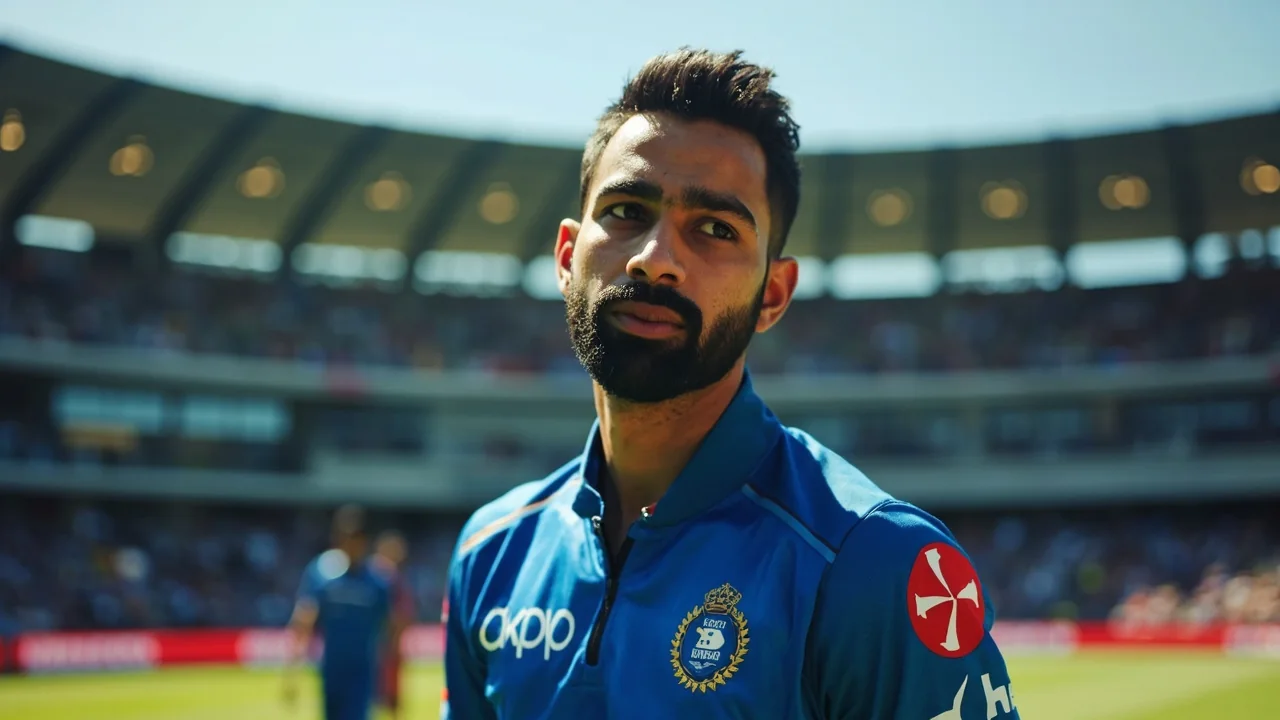
Hardik Pandya reported to the BCCI's Centre of Excellence in Bengaluru on 24 July for a structured recovery and training block, with the 2027 ODI World Cup in South Africa as the explicit long-term target. The block is not a return to competitive cricket; it is a controlled rebuild of match fitness after a stretch of injury setbacks that has kept him out of India's white-ball squads since the end of IPL 2026.
According to RevSportz's 24 July report, Pandya's day at the Centre of Excellence starts around 4 PM and runs through the late afternoon and into the early evening, totalling roughly four hours. Each session opens with 15 to 20 minutes of taping and stretching, followed by about an hour in the gym. The remaining time is split between bowling in the open nets and batting on a concrete pitch close to the nets.
For the desk's readers, the relevance is forward-looking rather than immediate. There is no competitive fixture attached to this block, no return date announced, and no India squad named. What the block does confirm is that Pandya remains in the team's planning for the 2027 ODI World Cup, and that the board is preparing him for conditions that will test his bowling workload and his ability to bat on pitches with extra bounce.
According to RevSportz's 24 July report, Pandya's day at the Centre of Excellence starts around 4 PM. The routine runs through the late afternoon and into the early evening, totalling roughly four hours. RevSportz added that the late-afternoon start is intended to avoid distractions, with the work beginning after most players have left the facility.
Each session opens with 15 to 20 minutes of taping and stretching. After the taping and stretch, he spends roughly an hour in the gym on strength and conditioning. The strength and conditioning block supports both his bowling economy and his batting power, and is described as a routine element of the day rather than a separate work stream.
The remaining two to two-and-a-half hours are split between bowling and batting. Bowling is done mainly in the open nets, which allow a fuller run-up and a longer spell without the artificial light of an indoor facility. Batting is done on a concrete pitch close to the nets, not on the main turf square. That concrete surface is the part of the routine that points most directly at the World Cup and is described in its own section below.
The bowling volume in the new block is the most concrete number attached to the story. Pandya is reportedly targeting around 12 overs of bowling per day, split into multiple spells of five to six overs each, with limited rest between overs within each spell. The aim, as one would expect from a block designed for endurance, is to rebuild the capacity to bowl ten overs in a competitive ODI without a meaningful drop in pace or accuracy in the back end of the spell.
The split into shorter spells with limited rest is also a conditioning tool. Long-format cricket asks an all-rounder to bowl in short bursts across a day, with field changes and tactical conversations breaking up the rhythm. Simulating that pattern in the nets — bowl five, change ends, bowl another six without a long break — gets the body used to the spikes and troughs of a match day, rather than the steady state of a flat-out net session.
The number to watch over the coming weeks is whether the workload holds steady at 12 overs or gradually steps down. If the workload drops without explanation, that is the most common early signal of a niggle being managed in the background. If it stays at or above 12 for a fortnight, that is a stronger sign that the body is responding as the support staff hoped and that a return to competitive cricket is being staged rather than rushed.
The clearest South Africa-specific element of the block is the batting drill. Pandya is reportedly practising on a slightly tilted concrete track, hitting with a plastic ball rather than a regulation cricket ball. The tilt changes the bounce the ball offers off the surface, and the plastic ball reproduces that bounce more cleanly than a leather ball on a flat concrete wicket would.
South African pitches, as the verified report notes, offer extra bounce and lateral movement for the fast bowlers. The batting response, in a generic sense, is to refine the back-foot game, the short-ball pull and the cut off the back foot — shots that depend on reading bounce early. A concrete surface reproduces the bounce shape; a plastic ball reproduces the speed off the surface; the tilt introduces the awkward extra. Together, the three elements approximate what a South African surface in 2027 is expected to throw at him.
The drill is a small but specific preparation choice, and it tells a story about how the team is framing the build-up. The tilt-and-plastic combination is the signature of a block that is preparing the batsman for bounce rather than pace, and for a long-form workload rather than a short, sharp comeback.
The new block is the first structured India-relevant training period for Pandya since the conclusion of IPL 2026. Between the end of the league and the start of the Bengaluru block, he has missed bilateral series against Afghanistan, Ireland, England and Zimbabwe. The verified report cites the four series as the reason for the current block; the specific venues, dates and results of those series are not detailed in the source and are left out of this briefing rather than reconstructed.
The list matters less for the specific opponents than for the cumulative load it represents: roughly four months of international cricket across home and away conditions, the kind of run that usually settles a middle-order all-rounder's place for a World Cup year.
The result is that Pandya enters the back half of 2026 with limited recent match intensity. The path back into the ODI XI is not guaranteed by reputation alone. It depends on whether the block delivers a body that can hold up across a tournament, and on whether the staff believe the South Africa drill has genuinely closed the gap on the missed match time.
The tournament's venue shapes the planning around an all-rounder's workload and shot selection.
South African pitches offer extra bounce and movement for the fast bowlers, as the verified report notes. The new block's tilted concrete drill exists to address that exact combination.
The drill points to a workload expectation rather than a fixed role. A ten-over bowling block that batters in the middle order is the natural reading of a 12-overs-a-day target combined with a bounce drill.
The block is preparation, not selection. The team management has not set a return-to-competitive date, and the next ODI squad is not yet announced.
A short forward-looking checklist for the desk's match-day readers.
If the 12-overs-a-day target holds for a fortnight without dropping, the body is responding. A drop of two or three overs without a stated reason would be the cleanest early signal of a niggle being managed.
Open nets accommodate a longer run-up; the main centre wicket is closer to match conditions. A reported shift to centre-wicket bowling would mark the end of the conditioning phase.
The natural staging post before an ODI return is a domestic 50-over game. A match in the Vijay Hazare Trophy or a Board President's XI fixture would be the clearest pre-tournament sign.
Follow the daily reporting at the news desk for the next bulletin on the block, the South Africa squad naming, and the broader India all-rounder picture as the World Cup window opens.
IPL Fantasy Score is an editorial publication. We do not run a paid fantasy platform; we publish coverage. The desk's habit is to describe the planning around a player in plain language and let the reader decide. We do not promise winning teams. We publish reasoning.
A second pass through the topic with extra context, examples and the small habits the desk uses when a workload story crosses into a fantasy frame.
India's white-ball squad has not stood still during Pandya's absence. The verified report does not detail which players have stepped into the all-rounder slots during the missed series, and the desk will not reconstruct that line-up here. What the block does confirm is that Pandya is rebuilding match fitness at the same time the team is using other options in competitive cricket; the relative form of both groups is a useful input once verifiable reporting arrives.
Articles, columns and references the desk keeps open in a browser tab through the season.

The desk's read on Tuesday's Wankhede fixture and what it means for the rest of the week.
Net-session updates from both camps and replacement options if either is held back.

What the surface looks like 90 minutes before toss, and the fantasy angle.
A short reading-end summary for the desk's match-day readers.
The Bengaluru block is a conditioning window with the 2027 ODI World Cup as the target. The next signal is whether the bowling volume holds at 12 overs a day for the next fortnight.
A tilted concrete track with a plastic ball is a South Africa-specific preparation choice. It points to a batsman working on bounce rather than pace.
Four missed series since IPL 2026 change the depth-chart arithmetic. Read the gap before you read the recovery block.